Thursday, September 2, 2010

Welcome to Stand Firm!

Want to advertise on Stand Firm? Click here for rates and info

The Williams Reflection - Same Old, Same Old

Tuesday, July 28, 2009 • 1:57 am

An interesting question for Williams to be asked would be “how much will actually be enough? At what point will you publically say “no more!”? Is there ever such a point for Williams?

The tragedy of this reflection is that ultimately there is nothing new. It’s just same old, same old. The Communion is no better off for what Williams has written. Nothing has changed. TEC and the Canadian church are still left to their own devices and the institutions of the Communion remain ineffective to stop them. Once again, Williams has not given us a way forward but simply described the options available. But we already knew them.

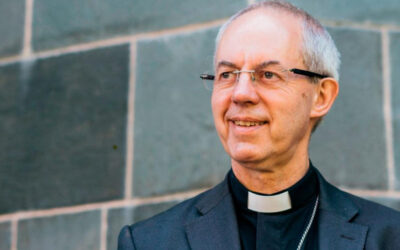
So it has finally arrived. The Archbishop of Canterbury Rowan Williams has released his much-anticipated comment upon the recent General Convention of the TEC. Rowan's piece, "Communion, Covenant and our Anglican Future", is presented as a "reflection" and that in itself should tell the reader that this is going to be more of the same.

Before we delve into the piece it's worth, I think, drawing your attention to a piece I wrote almost 3 years ago entitled "The Canterbury Tail" where I worked through a lengthy interview that Williams gave to a newspaper and explained how:
Williams is best understood as a Hegelian, that is that (at it's most simple level) history proceeds in a never-ending rhythm of thesis and antithesis leading to synthesis. As a result, Williams doesn't so much see his job as Archbishop to propound the thesis or orthodoxy so much as to govern over the process towards synthesis.

Put another way, Williams does not see his role so much to lead the Communion as to describe where the Communion is at and facilitate the conversation it is having.

This is, of course, a source of constant frustration to those of us who want clarity in these matters. But it is not Williams' way. Now, almost 3 years later, nothing much has changed in what we read from him. Nevertheless, allow me the indulgence of working through some of his "reflection" and making some comment.
1. No-one could be in any doubt about the eagerness of the Bishops and Deputies of the Episcopal Church at the General Convention to affirm their concern about the wider Anglican Communion. Their generous welcome to guests from elsewhere, including myself, the manifest engagement with the crushing problems of the developing world and even the wording of one of the more controversial resolutions all make plain the fact that the Episcopal Church does not wish to cut its moorings from other parts of the Anglican family. There has been an insistence at the highest level that the two most strongly debated resolutions (DO25 and CO56) do not have the automatic effect of overturning the requested moratoria, if the wording is studied carefully. There is a clear commitment to seek counsel from elsewhere in the Communion about certain issues and an eloquent resolution in support of the 'Covenant for a Communion in Mission' as commended by ACC13. All of this merits grateful acknowledgement. The relationship between the Episcopal Church and the wider Communion is a reality which needs continued engagement and encouragement.

2. However, a realistic assessment of what Convention has resolved does not suggest that it will repair the broken bridges into the life of other Anglican provinces; very serious anxieties have already been expressed. The repeated request for moratoria on the election of partnered gay clergy as bishops and on liturgical recognition of same-sex partnerships has clearly not found universal favour, although a significant minority of bishops has just as clearly expressed its intention to remain with the consensus of the Communion. The statement that the Resolutions are essentially 'descriptive' is helpful, but unlikely to allay anxieties.

Already here there is a tension. For many of us what Williams writes in paragraph 1 will be quite vexing. We have long noted that TEC says one thing about it's desire to remain in the Communion but then does another. One cannot repeatedly claim one thing while repudiating it in one's actions and still remain respected. It just doesn't work. It might be an olive branch to TEC but if so it is, in my judgement, misguided.

After a number of very helpful paragraphs reminding us that LGBT persons are still worthy of the greatest respect and love, Williams turns to the issue at hand:
6. ...the issue is not simply about civil liberties or human dignity or even about pastoral sensitivity to the freedom of individual Christians to form their consciences on this matter. It is about whether the Church is free to recognise same-sex unions by means of public blessings that are seen as being, at the very least, analogous to Christian marriage.

7. In the light of the way in which the Church has consistently read the Bible for the last two thousand years, it is clear that a positive answer to this question would have to be based on the most painstaking biblical exegesis and on a wide acceptance of the results within the Communion, with due account taken of the teachings of ecumenical partners also. A major change naturally needs a strong level of consensus and solid theological grounding.

8. This is not our situation in the Communion. Thus a blessing for a same-sex union cannot have the authority of the Church Catholic, or even of the Communion as a whole. And if this is the case, a person living in such a union is in the same case as a heterosexual person living in a sexual relationship outside the marriage bond; whatever the human respect and pastoral sensitivity such persons must be given, their chosen lifestyle is not one that the Church's teaching sanctions, and thus it is hard to see how they can act in the necessarily representative role that the ordained ministry, especially the episcopate, requires.

I want to suggest that this is both helpful and unhelpful at the same time. It is helpful in that it states very clearly that what TEC has done is step away from the mind of not only the Communion but also the "Church Catholic". Here Williams may be acutely aware of the great ecumenical damage caused by TEC's actions. However, it also demonstrates his continuing philosophical framework - what TEC has done is an antithesis that stands in stark contrast to the thesis of the "Church Catholic". For Williams it is, therefore, unacceptable.

I think three years ago I had not appreciated how committed to this position Williams actually is. He genuinely believes that what TEC is doing is wrong, despite any theological agreement he has with them. Of course, that doesn't mean that his approach is somehow better. It's as flawed as it has always been since his job is to lead, teach and banish strange doctrine. But it does mean we have to have sympathy with a man who has genuine concerns and convictions over this. We can appreciate his great pain over the matter while still lamenting over his appalling lack of leadership.

Williams continues this discussion until we arrive here:
16. In recent years, local pastoral needs have been cited as the grounds for changes in the sacramental practice of particular local churches within the Communion, and theological rationales have been locally developed to defend and promote such changes. Lay presidency at the Holy Communion is one well-known instance. Another is the regular admission of the unbaptised to Holy Communion as a matter of public policy. Neither of these practices has been given straightforward official sanction as yet by any Anglican authorities at diocesan or provincial level, but the innovative practices concerned have a high degree of public support in some localities.

17. Clearly there are significant arguments to be had about such matters on the shared and agreed basis of Scripture, Tradition and reason. But it should be clear that an acceptance of these sorts of innovation in sacramental practice would represent a manifest change in both the teaching and the discipline of the Anglican tradition, such that it would be a fair question as to whether the new practice was in any way continuous with the old. Hence the question of 'recognisability' once again arises.

18. To accept without challenge the priority of local and pastoral factors in the case either of sexuality or of sacramental practice would be to abandon the possibility of a global consensus among the Anglican churches such as would continue to make sense of the shape and content of most of our ecumenical activity. It would be to re-conceive the Anglican Communion as essentially a loose federation of local bodies with a cultural history in common, rather than a theologically coherent 'community of Christian communities'.

At this point I find myself in strange agreement with a rather well-known unitarian liberal, the Pluralist, who writes:
This argument applies to the ordination of women, surely? But when years ago he hinted at this reality, the actual reality of one local Church - The Church of England - forced a rapid reversal. Indeed, this local Church is not far off from deciding to ordain bishops: when other Anglican Churches do not and the whole of the Roman Catholic and Orthodox Churches do not.

Pluralist has, surely, touched upon a profound problem in Williams' argument. The old chestnut of women's ordination and consecration comes into play. Now, of course, we immediately must recognise that many of the conservatives, whether leaning towards evangelicalism or "catholicism", have seen this as a secondary issue whereas sexual ethics, Scripture tells us, is a more direct gospel matter. Nevertheless, the comparison is still there. Williams' problem then is that he may have to redefine what he means by the "Church Catholic" and our relation to it. Is it seen one way over gender roles and a different way over sexual ethics? The more I ponder this the more I come to the conclusion that it thoroughly undermines Williams' recourse to "Catholicity". What he is really appealing to is a perceived consensus in a more general way. Again, we are back at the base line of thesis and synthesis rather than the claimed catholicity.

So where to from here? For Williams the answer is in the Anglican Covenant. But, of course, some may not want to sign up:
22. It is possible that some will not choose this way of intensifying relationships, though I pray that it will be persuasive. It would be a mistake to act or speak now as if those decisions had already been made – and of course approval of the final Covenant text is still awaited. For those whose vision is not shaped by the desire to intensify relationships in this particular way, or whose vision of the Communion is different, there is no threat of being cast into outer darkness – existing relationships will not be destroyed that easily. But it means that there is at least the possibility of a twofold ecclesial reality in view in the middle distance: that is, a 'covenanted' Anglican global body, fully sharing certain aspects of a vision of how the Church should be and behave, able to take part as a body in ecumenical and interfaith dialogue; and, related to this body, but in less formal ways with fewer formal expectations, there may be associated local churches in various kinds of mutual partnership and solidarity with one another and with 'covenanted' provinces.

23. This has been called a 'two-tier' model, or, more disparagingly, a first- and second-class structure. But perhaps we are faced with the possibility rather of a 'two-track' model, two ways of witnessing to the Anglican heritage, one of which had decided that local autonomy had to be the prevailing value and so had in good faith declined a covenantal structure. If those who elect this model do not take official roles in the ecumenical interchanges and processes in which the 'covenanted' body participates, this is simply because within these processes there has to be clarity about who has the authority to speak for whom.

So TEC may very well end up on the "second track". Will that work? I suggest it is, ultimately unworkable and unacceptable because
  1. Who says TEC will self-select the "second track"? What if they continue their charade of being "full loyal members of the Communion? Who will derail them (so to speak) and sort the mess out? Certainly not Williams.

  2. Is it acceptable to have TEC continue to be recognised in this way? For some of us (and I would suggest a majority in the Communion) we are more than convinced that TEC has already boldly taken the step themselves into "outer darkness" (a clear allusion to Jesus' words recorded in Matt. 8:12, 22:13, 25:13 which speak of the fate of those who do not receive salvation on the day of judgement).


And here is the base problem. Williams proposes a solution that still recognises the position of TEC as validly Christian and capable of holding out salvation. They are still, in his mind, to be viewed as a Christian Church, despite their possible reluctance to sign up to the Covenant and full membership of the Communion. Will such an outcome be accepted by the majority of the Communion? It should not! The next section, then, leaves a really sour taste in the mouth:
24. It helps to be clear about these possible futures, however much we think them less than ideal, and to speak about them not in apocalyptic terms of schism and excommunication but plainly as what they are – two styles of being Anglican, whose mutual relation will certainly need working out but which would not exclude co-operation in mission and service of the kind now shared in the Communion. It should not need to be said that a competitive hostility between the two would be one of the worst possible outcomes, and needs to be clearly repudiated. The ideal is that both 'tracks' should be able to pursue what they believe God is calling them to be as Church, with greater integrity and consistency. It is right to hope for and work for the best kinds of shared networks and institutions of common interest that could be maintained as between different visions of the Anglican heritage. And if the prospect of greater structural distance is unwelcome, we must look seriously at what might yet make it less likely.

All of this rests on Williams' stated conviction that TEC as an institution is not already in the darkness. But that is simply not true. They cannot simply be regarded as "synthesis"

Williams concludes:
26. All of this is to do with becoming the Church God wants us to be, for the better proclamation of the liberating gospel of Jesus Christ. It would be a great mistake to see the present situation as no more than an unhappy set of tensions within a global family struggling to find a coherence that not all its members actually want. Rather, it is an opportunity for clarity, renewal and deeper relation with one another – and so also with Our Lord and his Father, in the power of the Spirit. To recognise different futures for different groups must involve mutual respect for deeply held theological convictions. Thus far in Anglican history we have (remarkably) contained diverse convictions more or less within a unified structure. If the present structures that have safeguarded our unity turn out to need serious rethinking in the near future, this is not the end of the Anglican way and it may bring its own opportunities. Of course it is problematic; and no-one would say that new kinds of structural differentiation are desirable in their own right. But the different needs and priorities identified by different parts of our family, and in the long run the different emphases in what we want to say theologically about the Church itself, are bound to have consequences. We must hope that, in spite of the difficulties, this may yet be the beginning of a new era of mission and spiritual growth for all who value the Anglican name and heritage.

The call for "mutual respect" might leave some choking. How far must we take this respect? How much further can TEC push their heresy? An interesting question for Williams to be asked would be "how much will actually be enough? At what point will you publically say "no more!"? Is there ever such a point for Williams?

The tragedy of this reflection is that ultimately there is nothing new. It's just same old, same old. The Communion is no better off for what Williams has written. Nothing has changed. TEC and the Canadian church are still left to their own devices and the institutions of the Communion remain ineffective to stop them. Once again, Williams has not given us a way forward but simply described the options available. But we already knew them.

Tragically, Williams has nothing to offer the Communion to get us out of this mess. What is needed now is clarity over how bad things have got and a firm disciplining of TEC. Would George Carey have allowed things to get so out of hand? Who knows. We are where we are now.

FCA types, such as myself, have been accused of disregarding the office of Canterbury as though it were not important. That is not actually where we stand. We recognise that Canterbury is not essential, which is not quite the same position. But Canterbury is vitally important, evidenced not least by the profoundly negative impact that Williams' inaction has had on the Communion. So a call now for Williams to go, in the light of his inactivity, is not to undermine Canterbury but, rather, to hold it in a very high place. For the sake of the reputation of his very high office he must vacate Augustine's Chair.

But if that is not to happen (and it will most probably not), do not be surprised to see the FCA continue to play its card of a Canterbury-less Communion with a growing confidence.

The great losers in all this will, undoubtedly, be the faithful orthodox who remain within TEC. What can be said to them?

Some will want to stay and fight. I say more power to them. They will recognise that their validity as Christians is not measured by their loyalty to a particular Province or bishop but to the Bishop of Bishops, Jesus Christ. They may find it hard to remain loyal to Him and live in their dioceses but that is their choice. What can we do to support them? I'm not sure but getting on our knees is a very fine and effective means of aid.

Others will want to leave. And we must support them too and find them new homes.

Neither position is more correct. To claim that one is, is to fall into the great mistake that Williams himself made. It would be to place loyalty to institution and its related processes over and above loyalty to Christ. That is where Williams has failed so badly and where we must stand firm. There is a true Catholic church made up of all believers, whether they stand bloodied on their little stone bridge or recuperating in their new Province. There is only one track in that communion.

And if Williams finally decides that he wants to be a part of it then I will lead the applause. But until then it will continue regardless, with or without him.
Comments:

If not signing the covenant means less than the fullest participation, given the weak wording of the covenant, TEC will probably sign, then just keep dong what it wants.  Unless the covenant has very strong and specific language, along the lines of, “Marriage between one man and one woman is the only acceptable relationship for sexual intimacy, and no person involved in any other relationship including sexual intimacy can be ordained or continue to serve in any ordained capacity.”  There should be similar strong words forbidding blessings of same-sex relationships.  More important than the sex issues, there should be specific words concerning the most important doctrinal issues.  Short of something that specific, I would not be surprised to see TEC sign it, then play the same kind of word games they have with the Windsor Report, Dar Communique, etc.  If ++Rowan won’t act to ensure something with teeth, the primates must, or the Communion will divide.

[1] Posted by Warren M on 07-28-2009 at 05:18 AM • top

I disagree Williams views TEC as ‘wrong.’  His actions have always been in support of TEC every step of the way.

OK, this time it’s so blatant he cannot whitewash TEC so he produced a form of words that suggests a degree of disapproval. That Williams ignores, nay, has actively assisted TEc in the outright persecution of Christians, says it all. 

Williams is not Hegelian.  He is Machiavellian!  He has obscured, evaded, sucked and manipulated to keep TEc, the orthodox OUT and divide and allow TEc to conquer.  He uses Heligianism, which I accept is a large part of his philosophy, but he is convicted the liberals are right and the orthodox need to shut up, so he uses Helgianism as a tool to mask his convictions and keep the orthodox wrong footed.  Frankly it’s worked brilliantly.  OK, by now it’s pretty hard so Williams has to say some words that seem pretty ‘hard.’  But he’ll assist Schori when it comes to anything regarding litigation and will not cast TEc out.

New Orleans anyone?  If that wasn’t proof enough you’ll never be see Williams’ nature.

I would accept his core was Hegelian if he was even handed in his treatment of liberals and the orthodox but his track record is 100% supportive of Schori.  Only in words does he suggest otherwise and, even now, he strongly hints that TEc are actually right and the Global South just haven’t caught up yet.

He is a Liberal.  Schori lashes out.  Williams covers her butt.  But they’re on the same side.  Just different tactics.

Williams speaks fair but acts foul.

[2] Posted by jedinovice on 07-28-2009 at 05:53 AM • top

“how much will actually be enough? At what point will you publicly say “no more!”?

What strikes me in Williams’ reflection is the presented dichotomy between the permanence of the institution and the transience of the doctrine taught by the institution.  One gets the impression that RW doesn’t really care what the church teaches so long as it teaches by consensus.  The answer to the question then is that the question is meaningless.  TEC isn’t violating a received set of doctrine.  It is disturbing the transient consensus of the permanent institution.  And TEC - being a permanent part of a permanent institution - can no more be separated from the church than water can be separated from the ocean.

carl

[3] Posted by carl on 07-28-2009 at 06:22 AM • top

David I think your have really identified the issue with +++Williams. I believe also that he must go. But what instruments are there to call for his stepping down? If it’s the Archbishops of the Provinces would they do such a thing?  Does their call for such a move have any impact on him.?

What we have is more waiting, now till February to see what happens. What date will be set after that?  If the goal of the ABC is to keep things together till his term is up, we have what four more years of waiting? Then what? Who replaces him and where do they stand?

What Gafcon or Global South voice will rise up and start challenging the comments of the ABC?
If we are to see a less Canterbury Communion as you say, it’s time for those new leaders to rise up and be heard.

I hate to see it come to that and I think many will stay just because of the connection to Canterbury but as someone who spend a number of years in another communion and back now in the ACNA fold that connection is less important to me.

While we continue to wait, we must not lose site of the goal, bringing others to Christ. We do that best by modeling Christ. Teaching his example, and Scripture.  We teach people to pray and set an example by praying for all those in this battle for the faith whatever side they are on.

David thank you for posting this, it has brought new clarity to the issues.

[4] Posted by bob+ on 07-28-2009 at 06:29 AM • top

given the weak wording of the covenant, TEC will probably sign, then just keep dong what it wants. 

Frankly, given the integrity of its actions over the past years I think TEC would sign up and keep doing what it wants even if the language of the covenant was strong!

That’s the problem with any opt-in answer to this crisis rather than a firm discipline.

[5] Posted by David Ould on 07-28-2009 at 06:31 AM • top

#2 - Shori and Williams are playing Good cop/Bad cop, eh?

[6] Posted by Floridian on 07-28-2009 at 06:33 AM • top

>#2 - Shori and Williams are playing Good cop/Bad cop, eh?

Not a bad way of putting it.  I wouldn’t say it’s a conspiracy.  Simply ‘birds of a feather.’  Though I do think Blair had a hand in giving Williams his ‘assignment.’

But New Orleans, that WAS a conspiracy.  Schori quite literally dragged him off and gave him the script!  It was at New Orleans I got Williams game.

[7] Posted by jedinovice on 07-28-2009 at 06:40 AM • top

If “Williams doesn’t so much see his job as Archbishop to propound the thesis or orthodoxy so much as to govern over the process towards synthesis”, then he is assuming that others will be passive in the face of his governing by non-governing.  However, his invitiation to “growth” and new “opportunities”, whether he understands it to be such or not, will likely be taken up by GAFCON, which will be happy to help the communion move forward into a new synthesis.  In this way, Canterbury is essential, but not necessary.

[8] Posted by pendennis88 on 07-28-2009 at 06:56 AM • top

Rowan Williams “accidentally” threw a wrench into the engine of the Covenant at the ACC. The Covenant is the vehicle to get us to that “two track” Anglican Communion. But it was Rowan, again, who assigned the mechanics to “fix” the vehicle. They are busy removing the engine of the vehicle (i.e., section four). Thus, when they are finished, it will be a jalopy in the front yard without motor - going nowhere.

Ms Schori will sign on to the soon to be worthless Covenant. We will have kicked the can down the road for a few more years. And the “two track” Communion will be such that no one will have to choose the second track.

Could it be that the bumbling Rowan Williams is actually the most manipulative leader in the history of the Christian Church?

[9] Posted by robroy on 07-28-2009 at 07:00 AM • top

Excellent recap and analysis, as usual, David!  Rowan didn’t accidentally do anything.  That he was and is Hegelian (with Machiavellian tendencies) is a most apt description.

Now, we know sans doute, that it is up to laity to mop this mess up and marshal troops to wage war.

Will the Anglican expression of Christianity be renewed, or for that matter, even survive?

[10] Posted by Athanasius Returns on 07-28-2009 at 07:05 AM • top

Hmmm, let’s see:

1. ACC is consultative and compromised by its unrepresentative membership.  Head of the JSC is Shori; the covenant is in her hands.
2. Lambeth Conference does indaba, no business.
3. Actions of the primates, such as the DES Communique, may be thwarted by the ABC.
4. ABC does not wish to act.

Il va sans dire…

rolleyes

[11] Posted by tired on 07-28-2009 at 07:25 AM • top

David+, I had to chuckle just now while checking the RSS feed of Anglican Mainstream. Your clone’s reflections on +Rowan’s missive (see here: http://www.peter-ould.net/2009/07/28/lambeth-palace-speaks/) are posted just above your own, and the takes are pretty different!

But what really intrigued me is that both you and Peter are saying things that are identical to what I have written in my own comments.  Peter’s commentary matches some of what I initially commented with enthusiasm for +Rowan’s strong words and clarity in denying that SSBs or ordination of non-celibate homosexuals (or hetersexuals in a sexual relationship outside of marriage) is a human right, or something the church must do because the culture is doing it.  Peter is very pleased by ++Rowan’s clarity on these matters, as was I.  (see my comment #73 on yesterday’s thread)

But at some point yesterday, I realized that so much of this was already said in 2006. I think I even wrote “same old, same old” as you have done.  And too, I have been struck by the fact that the words, while great, don’t mean much without actions or any mechanism for actions.  And +Rowan’s actions have seemed to ignore at best or worse, consistently undermine, his strong words.

Like you I was left asking, how does this specifically move anything forward?  Who decides when TEC has crossed a line?  TEC? (by “opting out” of the Covenant?) Individual Provinces and Primates? This is all in the realm of theory.  Here’s where I ended up yesterday (comment 114) and it’s so very similar to all you’ve written:

... the greatest weakness of this statement [is that it] is couched purely in theoretical terms.  ++Rowan is up in the clouds and restating sort of a high-level doctrinal position, but it is not in any way clear how this concretely relates to what TEC has done.

++Rowan never actually states what he believes TEC has done, what resolutions D025 or C056 signify.  His language is all focused on IF statements…

IF a local province were to take unilateral actions, there would be consequences.

IF a province were to do such and such, others in the Communion might not be able to recognize them as faithful to Christian teaching and practice, etc., etc.

So, while the idea of a two-track Communion might be well and good, as the idea of excluding TEC from having a voice in representing the Communion might be well and good, there is NO indication that I can find here of ++Rowan’s drawing or acknowledging any line.  He is merely repeating broad principles.

Some will say (and indeed HAVE said) that TEC has already crossed the line and renounced the moratoria and taken unilateral actions that necessitate such consequences.  But ++Rowan says no such thing, gives no hint of at what point TEC may be considered to have crossed such a theoretical line.  By not signing the Covenant?  Well, that takes us to at least 2012 if not 2015 or beyond.

++Rowan seems to leave open the question, in fact, that TEC has not renounced or breached the moratoria until / unless a non-celibate homosexual is ordained bishop or until there are authorized SSB rites.  He doesn’t say one way or the other how he interprets TEC’s actions and the two resolutions.  So the question is utterly open.

WHO is to say when TEC has crossed the line?
WHO is to say whether D025 and C056 constitute an overturning of the moratoria?

In fact, while decrying individual action on the local level, ++Rowan’s silence on these matters, or at the very least his failure to name any kind of structure or entity that will in fact speak on such matters, means that he has in fact blessed local option:  it will be up to each province & primate to decide for himself what TEC’s actions mean.

Ugh.

I really wish I could be as optimistic and excited as Peter is, but I think on this one, I’m siding with you wink

[12] Posted by Karen B. on 07-28-2009 at 07:32 AM • top

According to ENS and 815, what ++Rowan said about the purpose of the Covenant (ENS spin, not his words):

Finally, Williams upholds the proposed Anglican covenant as a way for the communion to maintain unity amid different viewpoints on human sexuality issues and theological interpretations.
http://www.episcopalchurch.org/79901_112891_ENG_HTM.htm

So, of course TEC will sign on to the Covenant.  As they have cast it here (and as one assumes it is currently being re-written) the very PURPOSE of the Covenant is to allow TEC to maintain its theology of sexuality, open communion and unitarianism, while forcing the GS to remain in full sacramental communion with them, or face removal from the “first tier” of the AC.

[13] Posted by tjmcmahon on 07-28-2009 at 07:47 AM • top

Does anyone really think that Williams’ successor would be much better? As the Church of England moves forward with women bishops, it’s proving itself to be little better than TEC.

[14] Posted by scribbler on 07-28-2009 at 08:36 AM • top

scribbler,
Proving? It has already proved so. The See of Canterbury is irrelevant. The ABofC is doing as TEc does and wishes him to do. March on the same path as TEc while they write him the check and he does pretty much what he wants despite the orthodox conservative traditionalist needs, words, pleas, etc…. He and the CofE and the See are debunk, irrelevant.

[15] Posted by TLDillon on 07-28-2009 at 09:23 AM • top

CANA is meeting this week.  Wonder if they will issue a statement?

[16] Posted by Floridian on 07-28-2009 at 09:32 AM • top

Fpr what it’s worth, take a good look at “Ex Cathedra - A.S. Haley” over on VOL, dated July 27th, 2009.  It’s a good read.

[17] Posted by Cennydd on 07-28-2009 at 09:36 AM • top

My summary: 

TEC says to ++Rowan:  “We want to have our cake and eat it, too.”

ABC puffs on his pipe, pauses for dramatic effect, and says:  “Hmmmm, that’s not what I was hoping you would say, but it is an interesting thought.  Let’s talk about it.”

[18] Posted by hanks on 07-28-2009 at 01:09 PM • top

I wouldn’t say that Rowan is exactly Machiavellian, but I agree he is calculating, and effectively leading the AC to stall. This letter is painstakingly crafted to do, as David+ says, more of the same. If the ABoC were truly a “do-nothing,” the Primates would have disciplined TEC, with teeth, and TEC might have split 2/3 liberal to 1/3 conservative, instead of 90% to 10%.

I think it is a bit inconsistent of Fr. Ould to argue that 1) TEC is not “validly Christian and capable of holding out salvation,” and not a Christian Church; and at the same time, 2) to say it is neutral as to whether one stays in or out.

In good conscience, I can’t avoid pointing out the logical and spiritual deficiency of knowing the truth of “1” and being indifferent to point “2.”

[19] Posted by alfonso on 07-28-2009 at 07:31 PM • top

CANA is meeting this week.  Wonder if they will issue a statement?”
  I rather hope not.  TET (as Captain Yips has it)is a dying institution drowning in its own toxic emissions - CANA is as fresh and lively as The Good News always is.  CANA should refrain from any actions that emphasize their secondary identity as disappointed ex-Episcopalians and concentrate their energies and resources upon those that emphasize their primary identity as serious, commited, orthodox Anglican Christians.

  Napoleon is supposed to have said, “Never interrupt your enemy when he is making a mistake.”  TET is destroying itself by its mistakes.  CANA should ignore it as the irrelevant carnival that it has become.

[20] Posted by Brize on 07-28-2009 at 09:44 PM • top

I think it is a bit inconsistent of Fr. Ould to argue that 1) TEC is not
“validly Christian and capable of holding out salvation,” and not a
Christian Church; and at the same time, 2) to say it is neutral as to
whether one stays in or out.

Thanks, you make a good point.
I’m able to hold those 2 in tension because of my ecclesiology. In the NT there are only 2 “churches”. There is the local congregation and the universal church. Thus if the local congregation remains committed to Christ and His gospel there really is no problem in remaining. Many problems come from thinking that it is the denomination which is “church” . It isn’t. It’s simply a grouping of congregations and dioceses.
So stay with your local congregation if they stay true.

However, as Matt and so many others have found, it is hard to stay with that local congregation if you find that your association with a diocese or denomination impairs your gospel witness.

Ultimately, then, I think it’s a matter of conscience and wisdom. So I say to all the orthodox, “stay or go - whichever means you end up remaining loyal to Christ”.

[21] Posted by David Ould on 07-28-2009 at 10:05 PM • top

David,

I’m happy to say that I’m in fundamental and hearty agreement with you.  In particular, I wholeheartedly agree that the two-tier or two-track strategy is simply unacceptable as a proposed solution, because, as you rightly stress, that second tier can’t be recognized as even being Christian at all.  There can be no communion with heretics, and so there can’t be communion between the so-called first and second tracks.  Therefore, this is no way to save the Anglican Communion, since there would be no communion within the Communion.

I’m also happy to say that I’m likewise in full agreement with carl’s #3.  ++RW is certainly treating the insitutional side of Anglicanism as its chief and most essential as well as enduring feature, whereas he treats the doctrinal and moral side as something that can continually evolve, since there is no agreement on those contentious matters among Anglicans anyway.

And that’s where the FCA movement is so important as a corrective and necessary protest.  Because as a confessional movement, the Fellowship of CONFESSING Anglicans stands for the all important principle that, as I’ve repeatedly siad here at SF, “Doctrine trumps polity, and not vice versa.”

++RW simply doesn’t believe that.  And many, many Anglican leaders likewise reject that notion.

We do in fact face a momentous fork in the road over that crucial choice.

David Handy+

[22] Posted by New Reformation Advocate on 07-29-2009 at 05:05 AM • top

There will never be “enough” for Rowan Williams because he doesn’t think in those terms.  You are assuming that he thinks in your terms except that his “line in the sand” is just way farther up the shore than yours is.  In fact, he doesn’t think in terms of “lines” at all.

Anybody remember the “Gestalt” psychological movement in the 60s and 70s?  Most famous was the “Gestalt Prayer” by Friz Perls which could be found hanging in many a college dorm room.

I do my thing and you do your thing.
I am not in this world to live up to your expectations,
And you are not in this world to live up to mine.
You are you, and I am I.
And if by chance we find each other, it’s beautiful.
If not, it can’t be helped.

Basically Williams is saying “You have your theology and I have mine.  I don’t have to accept your theology but neither can I impose my own on you. [Though I may point out deficiencies from time to time.] What’s important is that we’re all Anglicans together, because that’s really beautiful.”

Hence, the opening paragraph where he waxes elequent about how wonderful it is that TEC has said so strongly(and so recently) how much it values being a member of the Anglican Communion IS the point.  The squabbling may get so bad the kids have to be separated and driven in different cars, but we’ll still be driving up that great Anglican Highway together.  It’s a beautiful thing.

[23] Posted by Catholic Mom on 07-29-2009 at 09:41 AM • top

#23, Hmmm, and all this time I thought this here Church was heiarchical (I can’t spell it!).

KTF!..mrb

[24] Posted by Mike Bertaut on 07-29-2009 at 02:59 PM • top

Dear David,

If you wish to pursue your thesis re RDW’s supposed Hegelian methodology, may I suggest:

His article in Modern Theology 11/1 (1995), “Between Politics and Metaphysics: Reflections in the wake of Gillian Rose”, which is now reprinted in Wrestling with Angels.

Also, to back this up is Andrew Shanks, Against Innocence: Gillian Rose’s Reception and Gift of Faith (2008).  Enjoy!

[25] Posted by art on 07-29-2009 at 04:02 PM • top

The old saying is actually “wanting to eat one’s cake and (still) have it”. This fits much better with an Anglican province that wants to enjoy complete autonomy and full constituent membership at the same time. Or more fundamentally, disobey the ascertainable sex-ethics of Jesus of Nazareth and still call itself a Christian church.

Perhaps what applies more neatly to the AoC is “trying to run with the hare and hunt with the hounds”!

[26] Posted by Dr. Priscilla Turner on 07-30-2009 at 02:12 AM • top

It is interesting (to me at least) that the Dr. Williams’s, “reflection” is doing rather badly on liberal boards and blogs too. (I have said bad things about it on my blog, but for wider circulation negatives see Preludium.) When one is attacked from both sides, it is likely that one has completely missed the point.  I think that applies.

The ‘covenant’ is as last published and I think as first conceived, an attempt to force all of the members to behave.  It is not gonna work and the endless at this moment, editing of section 4 shows the point.  No one is going to concede the power to enforce boundaries be they national boundaries or theological boundaries.  Whatever one’s take on the issues, no one will wants an un-elected, parochial prelate (Dr. Williams) to call the dance.

Dr. Williams’s “solution” is centralization and it simply wont sell. 

FWIW
jimB

[27] Posted by jimB on 08-09-2009 at 01:53 PM • top

[27] jimB

It is interesting (to me at least) that the Dr. Williams’s, “reflection” is doing rather badly on liberal boards and blogs too.

It’s being attacked from both sides because RW is trying to have it both ways.  He wants official teaching to keep the conservatives happy, and unofficial practice to keep the liberals happy.  He wants to reconcile the attending hypocrisy through never-ending interminable discussions that will never be allowed to threaten the institution he truly serves.  But both sides are unsatisfied with this game of endless institutional legerdemain.  They both want teaching and practice to agree.  Liberals feel insulted by official teaching that contradicts their tacitly allowed practices.  Conservatives feel patronized by words that do no reflect what is really going on.  It’s a sure recipe for mutual animosity.

carl

[28] Posted by carl on 08-09-2009 at 02:28 PM • top

Jim B and others.  It has been suggested by a few good folk, from both sides of the divide, that Williams’ proposals are “centralist” and/or some form of “papalism”.  Frankly, nowhere does the Covenant or now these Reflections even hint at such moves: they are straw men to be only knocked down in the writer’s mind!

[29] Posted by art on 08-09-2009 at 08:39 PM • top

Registered members are welcome to leave comments. Log in here, or register here.


Comment Policy: We pride ourselves on having some of the most open, honest debate anywhere about the crisis in our church. However, we do have a few rules that we enforce strictly. They are: No over-the-top profanity, no racial or ethnic slurs, and no threats real or implied of physical violence. Please see this post for more. Although we rarely do so, we reserve the right to remove or edit comments, as well as suspend users' accounts, solely at the discretion of site administrators. Since we try to err on the side of open debate, you may sometimes see comments that you believe strain the boundaries of our rules. Comments are the opinions of visitors, and do not necessarily reflect the opinion of Stand Firm, its board of directors, or its site administrators.